Homeowner Tips · October 5, 2026
Energy-Efficient Home Upgrades 2026: What Buyers Want and What Pays Off
Eco-friendly features are the fastest-growing home trend in America right now, and they are changing what buyers will pay. Here is what is trending, what actually adds value, and which Georgia rebates are still on the table in 2026.

Lisa Harris, MBA, CLHMS
REMAX Center, GA #320847
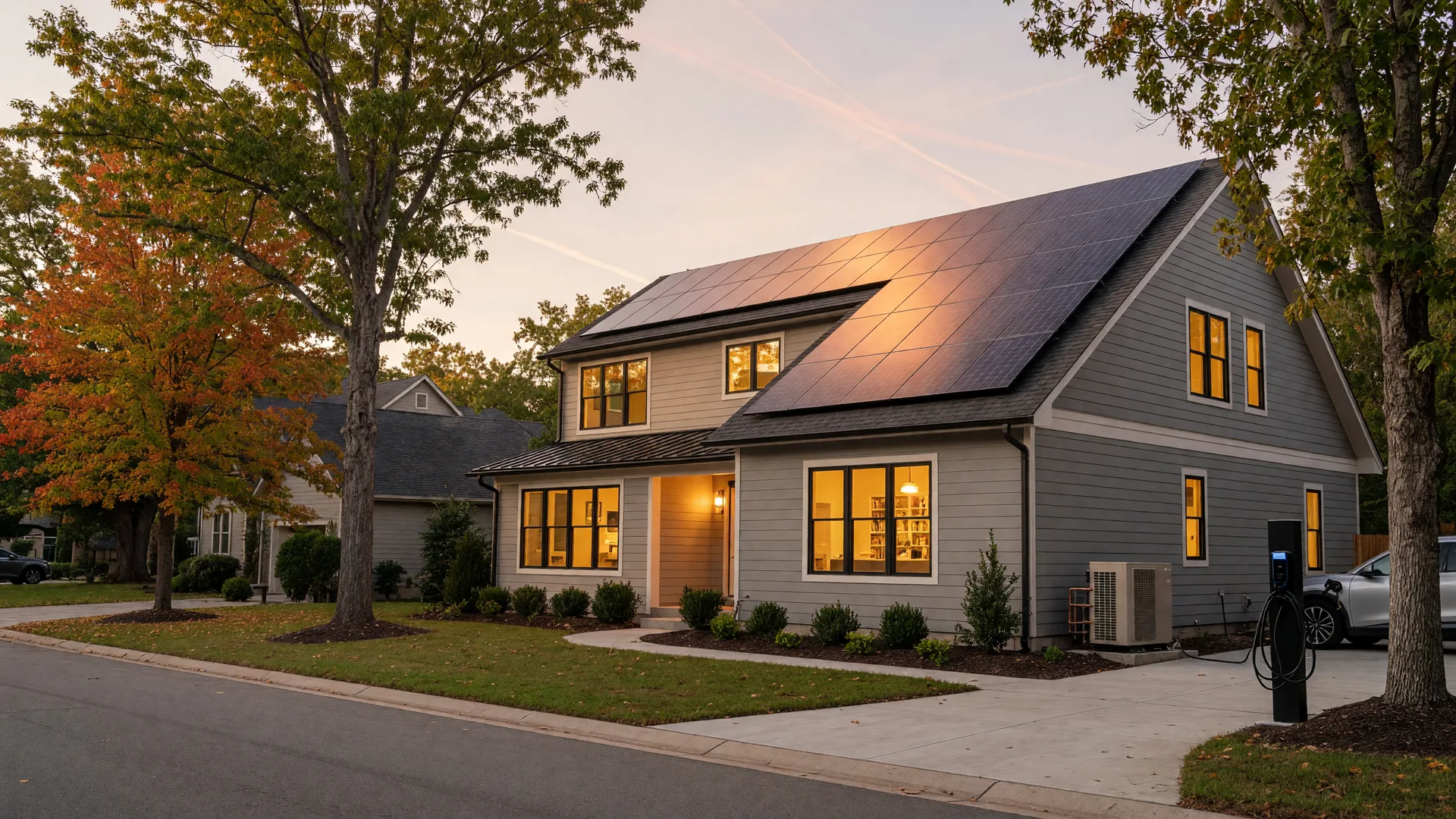
The hottest home trend of 2026 is not a paint color or a floor plan. It is energy efficiency. Realtor.com's trend data shows eco-friendly features dominating buyer searches, with WaterSense-certified fixtures up about 290% in listing mentions year over year, followed by EV chargers, high-speed wiring, and adaptable home features. Opulence is out. Efficiency is in, and it is changing what buyers will pay for a home across Northeast Metro Atlanta.
This matters whether you are selling, buying, or simply deciding where to spend your improvement dollars. A home that is efficient and current signals lower monthly costs, less maintenance, and a property that was cared for. A home that is not can read as dated, even when everything else is beautiful. As a luxury real estate specialist serving Dacula, Apalachee Farms, and the surrounding communities, I look at every listing through the lens of what today's buyer is actually searching for, and right now they are searching for efficiency.
WHY ENERGY EFFICIENCY IS THE HOTTEST HOME TREND OF 2026
The shift is measurable. Zillow reports mentions of “sustainable” and “green” in listings are up about 21%, with renewable-energy language rising even faster. A May 2026 survey from E.On Next found that 93% of homebuyers want green energy features like solar panels and EV charging in their dream home, 70% call energy technology non-negotiable, and 68% say they would not have sought these features just a year ago.
The fastest-growing listing keywords tell the same story. WaterSense-certified fixtures lead the list, followed by EV charging connections, high-speed internet wiring, and flexible, adaptable spaces. Buyers are asking about heat pumps, tankless water heaters, battery storage, smart thermostats, and upgraded insulation and windows. In the Southeast, they are also asking how a home handles heat, storms, and power outages. These are no longer niche requests from a small group of buyers. They are mainstream expectations.
WHICH ECO-FRIENDLY FEATURES ARE BUYERS SEARCHING FOR?
If you are planning improvements for resale, start with the features buyers are actively typing into their searches. WaterSense-certified fixtures, which use less water without sacrificing performance, are the single fastest-growing feature in listings. EV charging connections and EV-ready 240-volt outlets follow close behind, especially in communities like Apalachee Farms where many residents commute and drive electric.
Heat pumps are another headline feature. They heat and cool from one efficient system, they qualify for the largest Georgia rebates, and they are increasingly expected in new construction. Tankless water heaters, whole-home battery storage, smart thermostats, and high-speed wiring round out the list. For sellers, the lesson is that visible, documented efficiency signals are worth far more than invisible ones. A buyer cannot see good insulation, but they can see an ENERGY STAR label, a smart thermostat on the wall, and an EV charger in the garage.
“Buyers are no longer treating energy efficiency as a nice-to-have. It is a value signal. A home with solar, a heat pump, and an EV charger tells a buyer this property will cost less to run and was maintained by someone who cared. That confidence shows up in offers.”
DO ENERGY-EFFICIENT UPGRADES ACTUALLY ADD RESALE VALUE?
Yes, and the data is getting more specific every year. A June 2026 study from the home-energy firm 257 found that homes that mention solar panels in the listing sell for about 2% more, roughly $10,000 on a $557,000 median home, and homes that mention heat pumps sell for about 1% more, roughly $3,900 on a $399,000 median home. Freddie Mac research puts the overall premium for energy-efficient homes between 2.7% and 8%, and credits HVAC electrification with roughly a 103% return on investment.
The catch is visibility. The same studies found that most listings omit solar panels and heat pumps entirely, which means sellers are leaving real value off the table. Homeowners typically recoup 27% to 33% of solar and heat pump installation costs at resale, and the payoff grows when the features are photographed, described, and documented in the listing. Smart thermostats are the low-cost entry point: a $150 to $250 ENERGY STAR model can cut heating and cooling costs by up to 26% and is nearly universal buyer expectation.
GEORGIA REBATES AND INCENTIVES IN 2026: WHAT IS STILL AVAILABLE
One important change for 2026: the federal home-energy tax credits are gone. The 25C Energy Efficient Home Improvement Credit and the 25D Residential Clean Energy Credit were eliminated by the One Big Beautiful Bill Act, so they no longer apply to improvements installed after December 31, 2025. If you were planning around a federal tax credit, that math changed.
Georgia's state and utility programs, however, are still active. The Georgia HEAR program, administered by the Georgia Environmental Finance Authority, offers up to $8,000 for a heat pump and up to $1,750 for a heat pump water heater, applied at the point of sale, with a household cap of $14,000. The program paused new applications on August 10, 2026 and is set to reopen with limited measures in October 2026, so this is the moment to get on the list. The HOMES whole-home rebate program adds up to $8,000 for qualifying low-income households and up to $4,000 for moderate-income households.
Georgia Power's Home Energy Improvement Program rounds it out with up to $1,500 back on an air-source heat pump conversion, valid through December 31, 2028, up to $800 for a heat pump water heater, up to $400 for air sealing, up to $150 for a home energy assessment, and up to $250 for a solar water heater. The rebates can be stacked, which is how a heat pump project can get meaningfully cheaper than the sticker price suggests.
WHAT SELLERS SHOULD DO BEFORE LISTING
If you are preparing a home for sale, you do not need to electrify everything to benefit. Start with the visible signals: an ENERGY STAR smart thermostat, an EV-ready 240-volt outlet in the garage, energy-efficient appliances, and clear documentation of recent HVAC, roof, water heater, and window updates. If you have solar panels, a heat pump, or battery storage, make sure they are photographed and called out in the listing, because that is where the premium lives.
A home energy assessment is a smart, low-cost first step. It tells you exactly where your home loses efficiency, which upgrades will pay off, and which rebates apply. Then anchor every decision in your local market. What buyers in Apalachee Farms, Chateau Elan, or Sugarloaf Country Club are paying for tells you far more about what to upgrade than a national trend list ever will, and that is where a specialist who knows these communities makes the difference.
WHAT BUYERS SHOULD LOOK FOR
For buyers, energy efficiency is now a negotiating point, not just a preference. Ask for a year of utility bills before you make an offer. Check the age and condition of the HVAC system, water heater, and windows. Ask whether solar panels are owned or leased, because a lease changes the math. And ask whether the garage is EV-ready, because retrofitting a 240-volt outlet after closing is an expense you can price into your offer.
The homes that check these boxes tend to be the ones that were maintained thoughtfully, and that is exactly the kind of home worth paying for. The homes that do not are opportunities to negotiate, as long as you know what the fix will cost.
Questions about energy-efficient upgrades, what they are worth in your neighborhood, or the Georgia rebates available right now? Let's talk.
Lisa Harris, REALTOR®
MBA, CLHMS, Certified Luxury Home Marketing Specialist
Lisa Harris Realty | REMAX Center
Related Reads
Frequently Asked Questions
Do energy-efficient upgrades actually increase home value?
Yes, when they are visible in the listing. A 2026 study found homes that mention solar panels sell for about 2% more, and homes that mention heat pumps sell for about 1% more. Freddie Mac research puts the overall premium for energy-efficient homes between 2.7% and 8%.
Are federal tax credits still available for energy upgrades in 2026?
No. The federal 25C Energy Efficient Home Improvement Credit and the 25D Residential Clean Energy Credit were eliminated by the One Big Beautiful Bill Act, so they no longer apply to improvements installed after December 31, 2025.
What energy rebates are available to Georgia homeowners in 2026?
The Georgia HEAR program offers up to $8,000 for a heat pump and $1,750 for a heat pump water heater, and it is reopening in October 2026 after a pause. Georgia Power's Home Energy Improvement Program also offers up to $1,500 for a heat pump conversion and up to $800 for a heat pump water heater, and the rebates can be stacked.
Is an EV charger worth installing before selling a home?
For the right buyer, yes. EV charging connections are one of the fastest-growing features in home listings, and buyers who own electric vehicles will pay extra to avoid the hassle of installing one. An EV-ready 240-volt outlet is a relatively low-cost upgrade that signals the home is current.
Information believed to be accurate but not guaranteed.