Market Insight · August 27, 2026
Barndominiums in Georgia: The Hottest Housing Trend of 2026
Barndominium kits generate over 90,000 monthly searches. Georgia is the epicenter of this national trend. Here is what home buyers and sellers in Northeast Metro Atlanta need to know.

Lisa Harris, MBA, CLHMS
REMAX Center, GA #320847
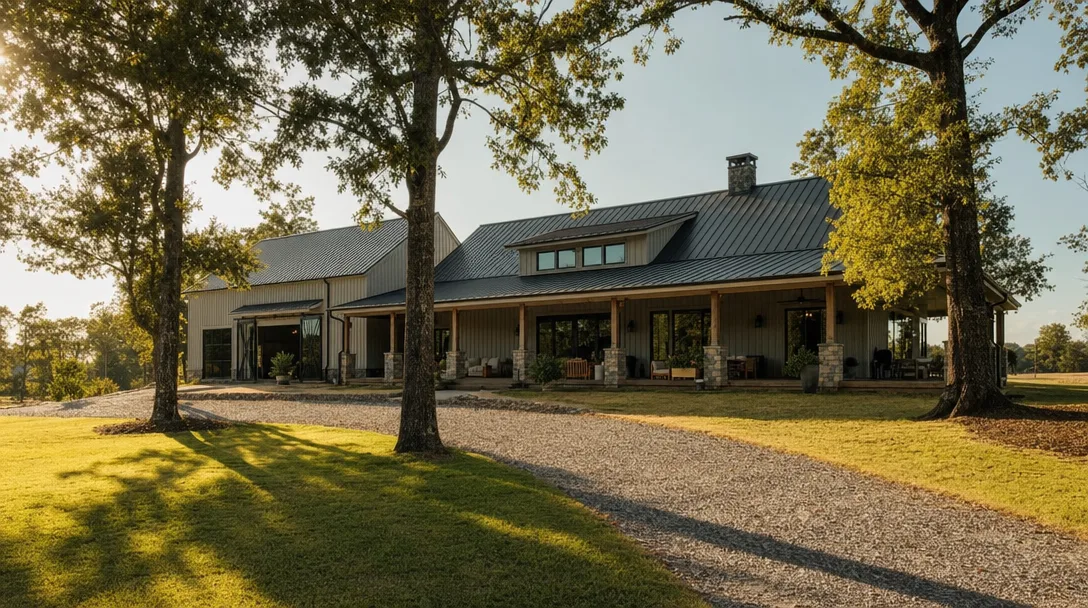
Barndominiums are the fastest-growing housing trend in America, and Georgia is at the center of it. With over 90,000 people searching for "barndominium kits" every month, a 50% increase in search volume year over year, this is not a niche movement anymore. It is a genuine shift in how a growing number of home buyers think about housing.
If you have been scrolling through Zillow or Redfin and noticed listings that look like a cross between a barn and a modern loft, you have seen a barndominium. These steel or post-frame structures combine living space with workshop, garage, or storage space under one roof, and they cost significantly less to build than traditional homes. In Georgia, over 300 barndominium conversion companies now operate statewide, a 100% increase since 2015, and barndo projects account for an estimated 15% to 20% of all single-family housing construction in the state.
Whether you are a buyer looking for an affordable alternative to traditional construction, a seller curious about whether a barndominium on your lot would add value, or a homeowner considering converting an existing structure, here is everything you need to know about the barndominium trend in Georgia.
“The barndominium boom reflects something deeper than a design trend. It is buyers demanding more square footage, more functionality, and more financial flexibility than the traditional housing market has been able to deliver. Georgia’s rural zoning, agricultural heritage, and expanding exurban communities make it the perfect home for this movement.”Lisa Harris, Luxury Real Estate Specialist, REMAX Center
What Is a Barndominium?
A barndominium is a steel or post-frame building that combines a residential living space with a workshop, garage, barn, or storage area in one structure. The term is a blend of "barn" and "condominium," although most barndominiums are single-family homes on private land, not condos. The concept originated in the rural Midwest and Texas, where farmers and ranchers wanted to live close to their equipment and livestock. Over the last decade, builders and buyers across the country have adopted the design for its affordability, durability, and versatility.
Modern barndominiums look nothing like the rustic barns of the past. Today's versions feature soaring vaulted ceilings, open floor plans, chef's kitchens, spa bathrooms, energy-efficient insulation, and high-end finishes that rival any traditional luxury home. The defining characteristic is not the aesthetic. It is the construction method: steel or post-frame rather than stick-built, which reduces both cost and build time.
Why Is Georgia the Epicenter of the Boom?
Multiple factors have positioned Georgia as a national leader in barndominium construction.
Favorable Rural Zoning
Georgia’s county-level zoning structure in many areas allows agricultural and residential uses on the same parcel without requiring a zoning variance. This makes it easier for property owners to build or convert a barn-style structure into a legal dwelling compared with states that have stricter separation requirements.
Affordable Land Prices
Compared with the national average, land in Northeast Georgia, including areas near Dacula, Braselton, Hoschton, and Jefferson, remains relatively affordable. A buyer can purchase a 2-to-5-acre lot for a fraction of what a comparable lot would cost in the suburban Atlanta core, then build a barndominium for $70 to $150 per square foot versus $180 to $280 for traditional construction.
Growing Exurban Demand
Remote work has untethered many families from the daily commute. Buyers who once needed to live within 30 minutes of their office in Atlanta are now looking at properties in Jackson County, Barrow County, and Gwinnett County's outer reaches. Barndominiums appeal to these buyers because they offer more space, more land, and a lower monthly housing cost than a traditional home in a closer-in suburb.
Established Builder Network
With over 300 barndominium conversion companies operating statewide, Georgia has a mature ecosystem of experienced builders, suppliers, and contractors. Buyers are not pioneering a new concept. They are working with professionals who have done this work hundreds of times.
“The numbers are hard to ignore. Traditional home construction in Georgia averages $200-plus per square foot. A well-built barndominium can deliver the same finished square footage for half the cost, and in many cases the build timeline is 50% faster. That is why this trend is not slowing down.”Lisa Harris, Luxury Real Estate Specialist, REMAX Center
The Pros of Barndominium Living
Dramatically Lower Cost Per Square Foot
This is the single biggest driver of the barndominium trend. Barndominiums in Georgia run $62 to $150 per square foot finished, compared with $180 to $280 for traditional stick-built homes. On a 2,000-square-foot home, that difference can mean a savings of $60,000 to $260,000.
Faster Construction Timeline
Steel and post-frame construction does not require foundation curing, framing delays, or weather-dependent exterior work in the same way traditional wood framing does. Many barndominiums go from foundation to move-in ready in 6 to 9 months, compared with 12 to 18 months for a similar traditional home.
Unmatched Versatility
A barndominium can include a home office, a home gym, a workshop, a garage for four cars, storage for an RV or boat, and even a rental apartment, all under one roof. The open-concept design allows owners to configure the space for their specific needs without the structural constraints of traditional framing. This "one and done" build concept is a primary driver of barndominium demand in 2026.
Durability and Low Maintenance
Steel and post-frame construction resists weather, pests, and fire better than wood framing. Barndominiums typically require less maintenance over their lifespan, and their metal roofs and siding can last 40 to 60 years with minimal upkeep.
Energy Efficiency
Modern barndominiums use spray foam insulation, radiant barriers, and energy-efficient HVAC systems that can outperform traditional homes in both heating and cooling costs. In Georgia’s hot and humid climate, proper insulation is critical, and experienced barndo builders know how to get it right.
The Cons: What Buyers Should Consider Carefully
Financing Can Be Trickier
Not all lenders treat barndominiums the same as traditional homes. Some require higher down payments, charge slightly higher rates, or decline the loan altogether if they cannot classify the property easily. FHA and VA loans have specific requirements for barndominiums, and not all lenders offer them. Working with a lender who has experience financing barndominiums is essential. In Georgia, the number of barndominium-friendly lenders is growing, but buyers should verify financing before committing to a build.
Zoning and Permitting Vary by County
Georgia is a county-regulated state when it comes to building permits and land use. Each county has its own zoning code, building inspection process, and requirements for septic, well water, and electrical connections. Some counties are barndominium-friendly. Others require additional permits, variances, or inspections that can add time and cost to the project. Buyers should research their specific county’s requirements before purchasing land.
Resale Market Is Still Niche
While barndominiums are rising in popularity, they still represent a smaller share of the housing market than traditional homes. That means the buyer pool for a resale barndominium may be narrower. On the other hand, in areas where barndominiums are concentrated, the local market supports strong resale values. A barndo in a well-established barndominium community in Georgia will command a different price than one standing alone on a rural road in a county with no comparable sales.
Interior Finishing Costs Can Add Up
The cost advantage of a barndominium applies mainly to the shell and structure. Interior finishes, especially cabinetry, countertops, flooring, plumbing fixtures, and climate control systems, are the same as any other home. Buyers who go into a barndo project expecting to furnish and finish 2,500 square feet of interior space should budget accordingly.
How Much Does a Barndominium Cost to Build in Georgia?
Costs vary based on size, location, finish level, and whether the buyer is building from a kit, hiring a general contractor, or converting an existing barn. Here are the ballpark figures based on 2026 market data:
- Barndominium shell (kit, no interior): $20 to $45 per square foot
- Finished barndominium (basic finishes): $70 to $110 per square foot
- Finished barndominium (luxury finishes): $120 to $150 per square foot
- Barndominium kit (pre-engineered package): $15,000 to $75,000 depending on size and complexity
- National average total cost (finished): approximately $230,000 for a typical 2,000-square-foot home
Compare these numbers to the median home price in metro Atlanta, which stands around $385,000. The potential savings are significant, especially for buyers willing to act as their own general contractor or do some of the interior finishing work themselves.
Is a Barndominium a Good Investment?
That depends on the location, the quality of construction, and the buyer’s long-term plans. In areas where barndominiums are already established, like parts of Jackson County, Banks County, and the broader Northeast Georgia region, the resale market supports values comparable to traditional homes. In areas where barndominiums are rare, the niche appeal may limit the pool of future buyers, which could affect resale timing.
For buyers who plan to live in the home for 10 years or more, the short-term savings on construction costs, combined with lower utility bills and minimal maintenance, make barndominiums an excellent financial decision. For buyers who anticipate selling within 3 to 5 years, the resale question is more important. An experienced local agent who understands the barndo market can help assess the resale potential in a specific area before you commit to the build.
How Walkable Are Barndominium Communities in Northeast Georgia?
Most barndominiums are built on acreage in rural or exurban areas, not in walkable subdivisions. Walkability is generally not the selling point. The trade-off is space, privacy, and affordability. That said, many barndominium properties in areas like Braselton, Hoschton, and Jefferson are within a 5-to-10-minute drive of grocery stores, restaurants, medical services, and schools. For buyers who value land and square footage over sidewalk access, the balance works well.
What This Trend Means for Sellers of Traditional Homes
The barndominium trend affects more than just the people building them. It shifts buyer expectations across the market. Buyers who are considering both traditional homes and barndos are comparing not just price, but space, functionality, and monthly payment. A traditional home that offers less square footage, higher monthly costs, and no workshop or garage space may lose out to a barndominium that delivers all three for the same or less money.
For sellers of traditional homes in Northeast Metro Atlanta, this means that pricing, presentation, and marketing matter more than ever. If your home competes with a new barndominium nearby, your home needs to offer something equally compelling: a better location, established community amenities (like those in Apalachee Farms), superior schools, or a lifestyle that a rural property cannot match. Understanding your competitive landscape is the first step to selling in any market, and the barndominium trend has added a new dimension to that analysis.
“The barndominium trend is not going to replace the traditional housing market. But it is a serious alternative that every buyer and seller should understand. Whether you are building, buying, or selling, knowing what is happening in the broader market helps you make better decisions. That is what I bring to every client relationship.”Lisa Harris, Luxury Real Estate Specialist, REMAX Center
The Bottom Line on Barndominiums in Georgia
Barndominiums represent a genuine shift in how a meaningful segment of American home buyers thinks about housing. Lower cost, faster build time, greater versatility, and lower maintenance are powerful advantages in a market where traditional homes have gotten more expensive and harder to finance. Georgia, with its favorable zoning, affordable land, and established builder network, is the perfect proving ground for this trend.
Whether you are a first-time buyer looking for an affordable path to homeownership, a family seeking more space for remote work and hobbies, a homeowner in Apalachee Farms or a nearby community wondering how the trend affects your property value, or an investor evaluating new construction opportunities, the barndominium market deserves your attention.
And if you are thinking about buying or selling any type of home in Northeast Metro Atlanta, I would love to help you navigate the numbers, the neighborhoods, and the market dynamics that matter most. That is what I do every day for my clients, whether they are buying a luxury estate, selling a traditional home in a golf course community, or evaluating whether a barndominium makes sense for their family.
Lisa Harris, MBA, CLHMS
Real Estate Agent · GA #320847
REMAX Center · 1225A Tuscany Drive, Braselton, GA 30517
Thinking About Buying or Selling in Northeast Metro Atlanta?
Whether you are considering a traditional home, a luxury estate, or a barndominium, the right strategy starts with the right data. Lisa Harris offers a free, no-obligation consultation for buyers and sellers in Dacula, Braselton, Hoschton, and all of Northeast Metro Atlanta. Let us talk about your goals and build a plan that works for you.
Schedule a Free Consultation