Homeowner Insights · September 7, 2026
ADUs in Georgia: The Hottest Home Trend of 2026
Nearly half of American homeowners are exploring adding an accessory dwelling unit. Here is what families in Northeast Metro Atlanta need to know about ADU laws, costs, and whether a backyard unit makes sense for their property.

Lisa Harris, MBA, CLHMS
REMAX Center, GA #320847
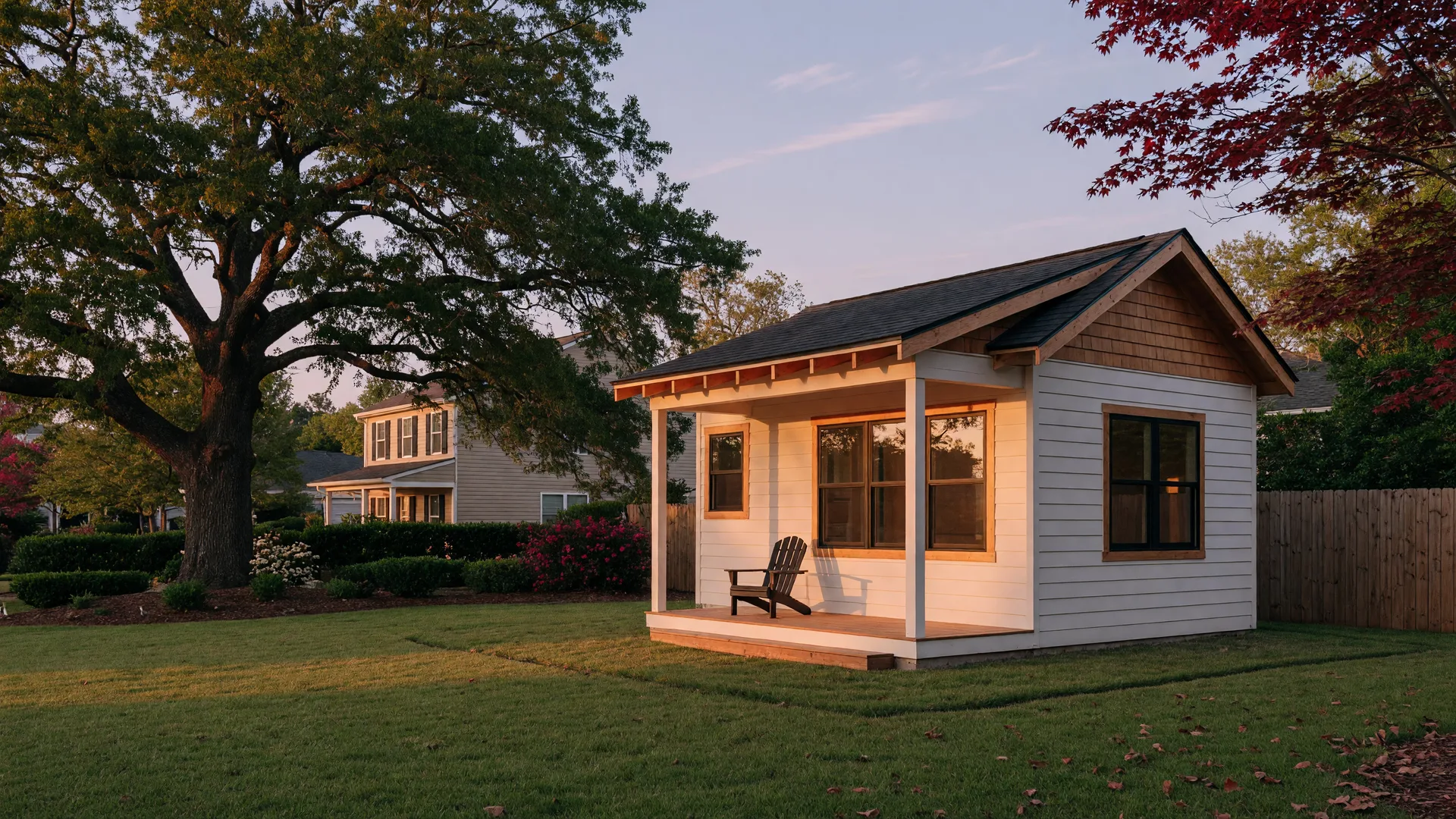
Accessory dwelling units, or ADUs, are the most-talked-about home trend in the country right now. Nearly 49% of U.S. homeowners are exploring ADU construction, citing space for family, rental income, and the desire to make more use of the property they already own. The U.S. ADU market reached roughly $19.65 billion in 2025 and is forecast to grow to about $21.5 billion in 2026. This is not a niche conversation anymore. It is the home trend that buyers, sellers, and homeowners are searching for every day.
In Georgia, that conversation comes with an important twist. Georgia is one of the states without a statewide ADU law, which means the rules for building an accessory dwelling are set entirely by each city and county. A permitted accessory apartment in one jurisdiction can be off limits in the town next door, and even a neighborhood association can change the calculus. Understanding those local rules is exactly where an experienced Northeast Metro Atlanta agent earns her keep.
Whether you are a homeowner in Apalachee Farms wondering about a backyard unit for aging parents, a buyer comparing what a home with an in-law suite is worth, or a seller curious about whether an ADU would add value before listing, here is what you need to know: what is trending nationally, what is legal in Georgia, and what it realistically costs to build. We will start with the basics and then get hyperlocal, because in this market local is the only way to make the right decision.
“ADUs are the hottest conversation in housing right now. The driver is simple: multigenerational living, plus the wish to get more value out of the home you already own. In Georgia, though, the answer to ‘Can I build one?’ is almost always the same: it depends on your city, your county, and your community’s covenants.”Lisa Harris, Luxury Real Estate Specialist, REMAX Center
What Is an Accessory Dwelling Unit?
An accessory dwelling unit is a second, smaller, fully functional home on the same lot as a primary residence. It has its own separate entrance, its own kitchen, its own bathroom, and its own living space, so whoever lives there can do so independently. ADUs can be attached to the main house, detached in the backyard, converted from a garage, or finished above a garage. You may hear them called granny flats, in-law suites, backyard cottages, carriage houses, or secondary suites. They are all the same family of housing: flexible, self-contained space on an existing lot.
What makes ADUs different from a finished basement or a spare room is the independence. Because an ADU has its own kitchen and bath, it functions as a true separate residence, which is what makes it genuinely useful for an aging parent, an adult child returning home, a caregiver, or a carefully selected renter. It is also what makes ADUs controversial with some local governments, because adding a separate dwelling changes who can legally live on the property and how it is taxed and regulated.
Why Are ADUs So Hot Right Now?
Multigenerational Living Is Booming
The single biggest driver of ADU demand is multigenerational living. Families are choosing to share a property, but not a house, more than at any point in recent memory. An ADU gives aging parents their own front door while grandchildren stay minutes away, or gives adult children independence without forcing them into a separate mortgage. Nearly 49% of homeowners exploring ADUs cite family and caregiving as the reason, and that share keeps growing in the Southeast, where extended family is close to the culture.
Homeowners Want to Use the Equity They Already Have
A second reason is financial. Homeowners across the country are sitting on record home equity, and many keep their low first-mortgage rates instead of refinancing out of them. Instead of moving to a bigger house, a growing number are tapping that equity to add a unit to the home they already love. Financing an ADU with home equity, through a HELOC or a cash-out refinance, is one of the most-searched real estate topics of 2026, for a simple reason: it turns dormant equity into usable living space.
Rental Income Helps Offset the Math
Where renting a separate unit is permitted, an ADU can generate meaningful monthly income. That income can support the family budget, cover a new mortgage payment, or build wealth over time. It also changes the purchase math for buyers: a home with a legal, rentable in-law suite is worth more to more people, because it offers flexibility a standard floor plan cannot match. The key word, in Georgia, is legal, and that brings us to the question everyone is actually searching for.
“The savvy homeowners I work with are asking about ADUs before they even tour a property. It changes the whole value conversation. A home that can host an aging parent, an adult child, or a monthly rental is worth more to more buyers. That is a competitive advantage in any market.”Lisa Harris, Luxury Real Estate Specialist, REMAX Center
Are ADUs Legal in Georgia?
As of early September 2026, Georgia still has no statewide ADU law. That is the single most important thing for consumers to understand, because unlike states with uniform rules, Georgia’s answer depends entirely on each city and county zoning code. House Bill 1166, proposed this year, would allow homeowners to build ADUs up to 400 square feet by overriding local zoning, but it has only cleared the House Governmental Affairs Committee so far, and it is not law yet. Until something passes outright, the rules on the books today in your specific jurisdiction are the ones that govern.
Now let us get hyperlocal, because this is where the trend meets reality in the communities I serve, including Apalachee Farms and Dacula in Gwinnett County. One honest caveat up front: verify the exact rules for your individual lot before any design or construction begins. Zoning codes change, variances are approved case by case, and every lot has its own setbacks and conditions. The framework below gives you the lay of the land, not a substitute for the official ruling.
Gwinnett County (Unincorporated Areas)
Gwinnett County does not have a standalone ADU ordinance, but accessory dwellings fall under the Unified Development Ordinance’s accessory building standards in Chapter 230, Section 230-120. Those standards require the accessory dwelling to be clearly subordinate to and supportive of the principal use on the same lot, and it generally must be located in the rear yard. A building permit is required with no size exemption, plans are reviewed for setbacks and maximum floor area, and the permit fee runs about $6 per $1,000 of estimated construction cost, with a $30 minimum. To check a specific lot, contact Gwinnett Planning & Development at 770-513-5020 or PND@GwinnettCounty.com.
Dacula (Inside Gwinnett County)
The City of Dacula operates under its own Zoning Resolution. In single-family districts, the city allows only customary accessory buildings and uses, and the only accessory dwelling explicitly defined is the Watchman’s Quarters, an attached or detached unit limited to on-site security, which cannot serve as a primary residence, cannot be rented, and cannot be used as a dwelling in the ordinary sense. Anything beyond that likely needs special use approval from the city on a case by case basis.
The takeaway for Dacula homeowners is simple: verify before you build. Zoning can change, and a property that could host an accessory unit today might not tomorrow. The right first step is always a call to the city’s planning or zoning department, followed by a conversation with an agent who understands what actually adds resale value in your neighborhood.
How Much Does an ADU Cost to Build in Georgia?
Costs vary widely by size, location, finish level, and whether you are building new, converting a garage, or finishing space above an existing garage. These are the ballpark figures for the Northeast Metro Atlanta region in 2026:
- New construction, basic finishes: roughly $180 to $220 per square foot
- New construction, premium finishes: about $280 to $350 per square foot and up
- Conversions of existing space: roughly 20% to 30% less than new construction
- Basic garage conversion: about $35,000 to $75,000, depending on existing conditions
- ADU above an existing garage: approximately $120,000 to $185,000
- New garage plus ADU combined: about $185,000 to $230,000
- Permit and impact fees: roughly $1,500 to $3,500 in permits plus about $2,000 to $4,000 in impact fees
To put that in context, the average garage conversion in Georgia runs around $101,000, and brand-new detached construction at premium finishes can approach the cost of a modest home. The math only works when the project fits your lot, your local rules, and your long-term plan, which is exactly why the cheapest ADU is rarely the smartest one.
How Do Homeowners Finance an ADU?
Because most ADUs are added to an already-owned property, financing looks different from a standard home purchase. The most common paths are home equity lines of credit, cash out refinances, construction loans, renovation loans, and personal savings. Homeowners with a low rate on their first mortgage often prefer a HELOC, because it leaves the first loan untouched. Buyers purchasing a property with an existing, permitted ADU can often finance it as a regular home purchase, since the unit is part of the appraised value. Either way, what you can borrow, your rate, and your appraisal treatment depend on your property and lender, so compare options before breaking ground.
Do ADUs Add Value in Northeast Metro Atlanta?
In locations where an accessory dwelling is permitted, built, and built well, an ADU can add genuine value, because it adds usable square footage, a second front door, and income potential that few standard floor plans can match. Buyers looking for multigenerational flexibility regularly pay a premium for a legal in-law suite over an identical house without one. That is especially true in the family-oriented communities across Gwinnett, Hall, and Barrow counties, where multiple generations living near one another is common, and community amenities like those in Apalachee Farms only add to the appeal.
The flip side matters just as much. An unapproved unit can become a problem at resale, when an inspection, appraisal, insurance, or a buyer’s lender flags space that was never officially approved. In planned communities, HOA covenants can restrict accessory dwellings or short-term rentals entirely, no matter what the county says. That is why the ADU value question can only be answered lot by lot and neighborhood by neighborhood, with someone who knows the local landscape. The trend is real. The execution has to be local.
What to Do First If You Want an ADU
- Check zoning for your exact lot. Start with Dacula planning or Gwinnett County Planning & Development, including 770-513-5020, before any design work.
- Read your homeowner or community covenants. Even where the county allows an ADU, neighborhood restrictions can override it.
- Get real cost estimates from experienced contractors who have built permitted accessory dwellings in your county, not just room additions.
- Compare financing. A HELOC, cash out refinance, or renovation loan may make sense, and a mortgage professional can run the actual numbers for your situation.
- Ask an experienced local agent what the unit would add to resale value in your specific neighborhood, because value depends on what buyers there actually want.
“The ADU question is really a value question. In the right location, with the right permits, an accessory dwelling can add usable space, rental income, and multigenerational flexibility to a home. Done wrong, it can create headaches at resale. Knowing the difference is where an experienced local agent earns her keep.”Lisa Harris, Luxury Real Estate Specialist, REMAX Center
The Bottom Line on ADUs in Georgia
ADUs are the hottest conversation in homeownership right now, and for good reason. They offer multigenerational flexibility, income potential, and a way to get more out of the property you already own. But in Georgia, the trend runs straight into a patchwork of city, county, and community rules, which means the difference between a smart investment and a costly mistake usually comes down to knowing your county, your zoning, and your neighborhood.
For homeowners, the smartest path is to investigate early, before you need the space, so you are not scrambling when a parent moves in or a child graduates. For buyers, a property with a legal, permitted accessory dwelling deserves a serious look, because it delivers flexibility that a standard floor plan cannot. And for sellers, an ADU can be a genuine differentiator, one more reason a buyer chooses your home over the comparable house down the street.
Whether you are buying, selling, or simply making the most of the home you have in Northeast Metro Atlanta, I would love to help you think through the numbers, the local rules, and what actually adds value in your part of Gwinnett, Hall, or Barrow county. That is exactly what I do every day for my clients, whether they are selling a home in Apalachee Farms, buying a luxury estate, or figuring out how a backyard unit fits into their family’s future.
Lisa Harris, MBA, CLHMS
Real Estate Agent · GA #320847
REMAX Center · 1225A Tuscany Drive, Braselton, GA 30517
Thinking About Buying or Selling in Northeast Metro Atlanta?
Whether you are curious about ADUs, comparing homes with separate suites, or getting ready to build in Dacula, Braselton, Hoschton, or Apalachee Farms, the right strategy starts with the right data. Lisa Harris offers a free, no obligation consultation for buyers and sellers across Northeast Metro Atlanta. Let us talk about your goals and build a plan that works for you.
Schedule a Free Consultation